

INTRODUCTION

TYPES OF RELATIONSHIPS

DO'S

DON'TS

Loyalty
Keys to understanding the relationship your brand creates with people in their day-to-day lives.
Why does loyalty matter today?
Loyalty is no longer just a points program: today it's a relationship strategy that integrates experiences, data, and emotions throughout the entire journey. This report summarizes what drives loyalty, what erodes it, and how to design it sustainably.
In a saturated, competitive, and price-sensitive market, loyalty doesn't exist to “retain” customers, but to build relationships capable of withstanding cheaper alternatives. Strong loyalty generates recurring revenue, drives referrals, it fuels first-hand data and turns brands into trustworthy and consistent choices. Understanding what activates this bond—and what breaks it—is key to competing sustainably.
Why does loyalty matter today?
Loyalty is no longer just a points program: today it's a relationship strategy that integrates experiences, data, and emotions throughout the entire journey. This report summarizes what drives loyalty, what erodes it, and how to design it sustainably.
In a saturated, competitive, and price-sensitive market, loyalty doesn't exist to “retain” customers, but to build relationships capable of withstanding cheaper alternatives. Strong loyalty generates recurring revenue, drives referrals, it fuels first-hand data and turns brands into trustworthy and consistent choices. Understanding what activates this bond—and what breaks it—is key to competing sustainably.
The Map of Loyalty
Loyalty is not a fixed state, but a spectrum that ranges from transactional—immediate benefits like price, convenience, or rewards—to emotional, where bonds arise based on trust, identity, and belonging. Between these two poles coexist different types of relationships that brands can activate according to their category and audience.
This diagram allows you to explore how brand loyalty strategies work and how the components and ecosystems that sustain lasting relationships are connected.


Transactional Loyalty vs. Emotional Loyalty
Loyalty is built throughout the entire journey: from the first contact to post-sale. Each stage activates different opportunities to create value—whether functional or emotional—and each design decision influences how much the relationship with the user is strengthened or weakened.
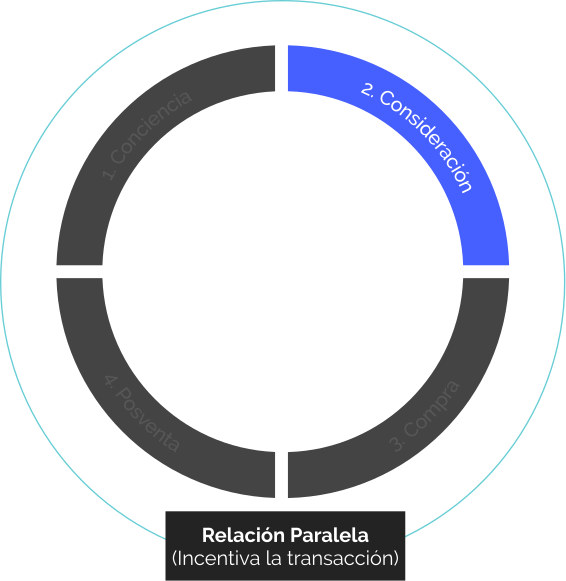
The parallel relationships they act at specific moments in the journey: subscriptions, payment models, discounts, or rewards that incentivize the transaction.
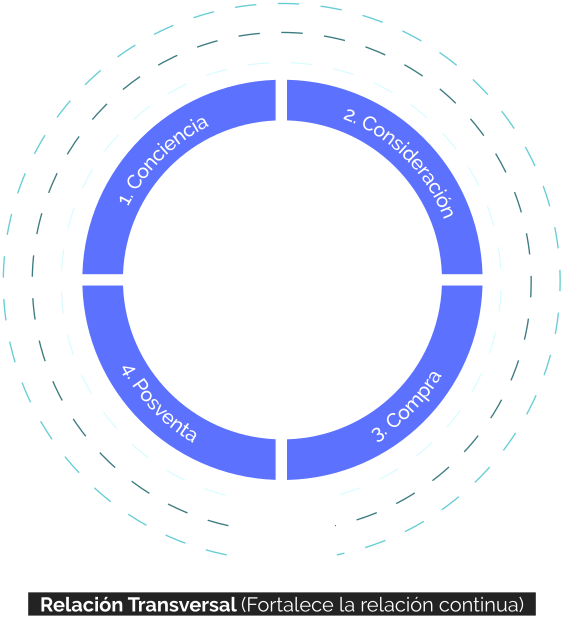
The cross-functional relationships accompany the complete journey, integrating coherent experiences that connect benefit, service, and meaning.
Transactional
Loyalty transactional It arises when people perceive clear and tangible benefits. It works well for driving repeat purchases, but it's fragile: if another brand offers better incentives, the connection breaks quickly.
Key features:
- They are motivated by immediate rewards.
- It is built with points, discounts, or promotions.
- High sensitivity to price and convenience.
- It is easy for the competition to replicate.
Emotional
Loyalty Emotional arises from emotional bonds and meaningful experiences. It is deeper, more resilient, and does not depend on discounts or economic benefits.
Key features:
- It arises from identification with the brand and shared values.
- Strengthen the perception of value beyond the tangible.
- It adapts to the user's interests and needs.
- It is difficult for other competitors to replicate.
Parallel relationship:
Loyalty components
Efforts to build loyalty tend to focus in specific phases of the Customer Journey. Brands focus their resources on creating a specific connection at the stage they consider most critical or effective for user conversion and retention.
Loyalty ecosystems integrate different components to accompany the user throughout their entire journey. They are not limited to programs or subscriptions; they aim to create a continuous, cross-cutting, and coherent relationship with the brand, present at multiple moments in their lives.
Cross-sectional relationship
Loyalty ecosystems
Loyalty ecosystems can integrate various loyalty components to generate an intrinsic and cross-cutting relationship with the customer.
These strategies seek linking, integration, and holistic care throughout all phases of the journey. This approach allows the brand to be present at multiple moments in the customer's life, generating a much closer and more consistent bond.
It's important to specify that cross-loyalty doesn't always require components like a loyalty program, a subscription, or a payment model.
Types of relationships
The relationship between people and brands is built on three types of relationships: rational, emotional, and mixed.
Rational components ensure functionality; emotional components generate connection and meaning; and mixed components combine both to create memorable experiences.
Understanding how these types of relationships interact allows us to see what nourishes the bond, what strengthens it, and what truly differentiates a brand in people's lives.
Product/service quality and effectiveness
Transactional
Brand's ability to consistently deliver products or services that meet their promises, ensuring functionality and satisfaction in terms of cost-benefit.
Consistency
Transactional
Constant fulfillment of the brand's promise of value over time, reinforcing user trust.
Convenience
Transactional
Ease of access, availability, and simplicity in processes that allow the user to maintain a fluid connection with the brand.
Relevance
Mixed
Brand's ability to remain meaningful in people's lives, adapting to their changing needs and socio-cultural context.
Adoption
Mixed
Level of integration of the brand's products or services into people's daily routines, becoming part of their habits and lifestyle.
Efficiency in experience
Mixed
Quality and differentiation of service or experience at each touchpoint, combining the functional and emotional to generate memorable interactions.
Recognition
Mixed
Tangible or symbolic appreciation towards frequent users, expressed through benefits, rewards, or gestures that make them feel appreciated and valued.
Identity
Emotional
The extent to which a brand reflects consumers' lifestyles, aspirations, or personal values, serving as a mirror of who they are or aspire to be.
Values and Impact
Emotional
Brand alignment with significant ethical, social, and environmental principles for consumers, generating trust and legitimacy.
Familiarity
Emotional
Emotional bond that arises from closeness and continuity over time, generating trust and security.
How is loyalty built and strengthened? (Do's)
Loyalty arises when experiences blend the functional with the emotional. It's not enough to offer value, efficiency, or clarity: people stay when a brand also generates surprise, closeness, trust, and belonging.
These four emotions are what strengthen a relationship over time and can be activated at different moments of the journey. Here's how different brands have achieved it.
- INNOVATION AND DIVERSE UTILITY (SAMSUNG)
- Exceed expectations with reliable technology and useful features that improve users' daily lives.“I was surprised by how advanced its refrigerator is, it has great technology and works incredibly well.”.
- THE OFFER EXCEEDS EXPECTATIONS (3B)
- Surprise with variety, good quality, and accessible prices that offer more than expected.“I always find great and inexpensive products, even gourmet ones.
- Unexpected Rewards (Philadelphia)
- Reward with surprising details and rewards that strengthen customer connection and loyalty.“They gifted me an extra Philadelphia and it was an unexpected gesture.”.
- Offer Customization (Amazon)
- Personalize recommendations based on purchasing habits, facilitating the experience and strengthening customer relationships.“They know me better and better, they always suggest exactly what I need.”.
- HUMAN, EMPATHETIC, AND CLOSE ATTENTION (BANCO AZTECA)
- Offers direct and empathetic care, resolving questions kindly and building trust through a human approach.“They always treat me with respect and help resolve my doubts quickly, which is appreciated.
- PRESENT OFFER BEFORE PURCHASE (WALMART)
- Provides facilities to try products before buying, helping to make safe and sound decisions.“I was able to try it before buying, and it convinced me, which gives me confidence.
- BALANCE VALUE COST (MOTOROLA)
- It offers reliable and durable technology at accessible prices, building trust through its proven performance and quality.
“My Motorola has been working perfectly for years; it delivers what it promises without fail.
- It offers reliable and durable technology at accessible prices, building trust through its proven performance and quality.
- TRANSPARENCY EVEN IN THE FACE OF FAILURES OR ERRORS
- Brands that acknowledge failures and communicate honestly build trust and maintain long-lasting relationships.
“I like it when they admit mistakes and explain what they will do, it gives me peace of mind.
- Brands that acknowledge failures and communicate honestly build trust and maintain long-lasting relationships.
- QUICK AND EFFECTIVE SOLUTIONS (AMAZON/WALMART)
- They resolve issues quickly and with empathy, offering hassle-free replacements or refunds to maintain satisfaction.
“I had a problem and they fixed it right away, no beating around the bush or excuses. Very reliable.
- They resolve issues quickly and with empathy, offering hassle-free replacements or refunds to maintain satisfaction.
- Continuous Availability
OXXO- It fulfills its promise of convenience by being always available, offering practical solutions at any time.
“There's always an Oxxo open when I need it, even in the middle of the night.
- It fulfills its promise of convenience by being always available, offering practical solutions at any time.
- QUALITY THAT WON'T FAIL (ADIDAS)
- It maintains high standards in every product, demonstrating durability and consistency that generate long-term loyalty.
“My Adidas sneakers have lasted for years, I always trust their quality and comfort.
- It maintains high standards in every product, demonstrating durability and consistency that generate long-term loyalty.
- ACTIVE AND ACTIONABLE LISTENING (MOVISTAR)
- Collect and apply customer feedback to improve services, strengthening trust and a sense of belonging.“They listened to me and fixed the problem quickly; you can tell they value our opinions.
- COHERENCE WITH VALUES (ECOLANA)
- Its authentic environmental purpose connects with consumers who seek responsible brands aligned with their principles.“I identify with your ecological commitment; I feel we share the same vision.”.
- Genuine Customer Recognition (Amazon)
- Values user loyalty with personalized benefits and attentive service that makes them feel appreciated.“They always make me feel important, like they really know my habits.”
- Community with a Shared Identity (Volkswagen)
- It fulfills its promise of convenience by being always available, offering practical solutions at any time.“There's always an Oxxo open when I need it, even in the middle of the night.
Product/service quality and effectiveness
Type of motivation
- Level 1
- Level 2
- Level 3
Fundamental Pillar
Brand's ability to consistently deliver products or services that meet their promises, ensuring functionality and satisfaction in terms of cost-benefit.
- The cost-benefit relationship must be fair and be perceived as superior to other alternatives.
- This pillar is the foundation of any relationship: if quality or effectiveness fail, the bond will hardly hold, even if other pillars are involved.
Examples
streaming Spotify, for its uninterrupted technical efficiency in critical usage moments.
Consistency
Type of motivation
- Level 1
- Level 2
- Level 3
Fundamental Pillar
Constant fulfillment of the brand's promise of value over time, reinforcing user trust.
- Consistency builds credibility and strengthens relationships.
- It's not limited to the product: it includes communication, service, and experience.
- Inconsistency (recurring errors or contradictory messages) damages accumulated trust.
Examples
Convenience stores OXXO or 7-Eleven, where inventory consistency and store layout build user confidence in their daily routine.
Convenience
Type of motivation
- Level 1
- Level 2
- Level 3
Fundamental Pillar
Ease of access, availability, and simplicity in processes that allow the user to maintain a fluid connection with the brand.
- Quick access, proximity, and usability are key to
the link. - If convenience is lost, people move to more practical options.
- Often, convenience is reinforced by familiarity, leading to more lasting relationships.
Examples
Supermarkets: Walmart, due to their strategic locations and an online purchasing platform that simplifies buying.
Relevance
Type of motivation
- Level 1
- Level 2
- Level 3
Fundamental Pillar
Brand's ability to remain meaningful in people's lives, adapting to their changing needs and socio-cultural context.
- A brand must evolve with its users; if it doesn't adapt, it loses relevance.
- Relevance implies constant innovation and diversification of offerings.
- When a brand stops being meaningful, it stops being chosen, regardless of its history or track record.
Examples
Technology Sony, what happened from physical players to the PlayStation ecosystem, remaining significant for new generations of users.
Adoption
Type of motivation
- Level 1
- Level 2
- Level 3
Fundamental Pillar
Level of integration of the brand's products or services into people's daily routines, becoming part of their habits and lifestyle.
- It happens when a brand becomes indispensable in our routine.
- Products that solve everyday needs with functional value tend to become established.
- Adoption reinforces loyalty by creating a habit that is difficult to replace.
Examples
Entertainment Spotify, as the daily-use platform that has become a habit difficult to replace.
Efficiency in experience
Type of motivation
- Level 1
- Level 2
- Level 3
Fundamental Pillar
Quality and differentiation of service or experience at each touchpoint, combining the functional and emotional to generate memorable interactions.
- A smooth and satisfying experience reinforces preference.
- Differentiation can occur in attention, environment, or personalization.
Examples
Digital Banking Nu (Nubank), to eliminate bureaucracy with an intuitive and effective interface that breaks with the friction of traditional banking.
Recognition
Type of motivation
- Level 1
- Level 2
- Level 3
Fundamental Pillar
Tangible or symbolic appreciation towards frequent users, expressed through benefits, rewards, or gestures that make them feel appreciated and valued.
- Combine functional recognition (benefits, discounts, points programs) and emotional recognition (preferred treatment, personalized attention).
- Strengthens reciprocity and motivates retention.
- Lack of recognition breeds disinterest or burnout.
Examples
VIP Experiences American Express, for offering preferential treatment, access to exclusive lounges, and gestures of appreciation that reinforce the user's status.
Identity
Type of motivation
- Level 1
- Level 2
- Level 3
Fundamental Pillar
The extent to which a brand reflects consumers' lifestyles, aspirations, or personal values, serving as a mirror of who they are or aspire to be.
- People project their identity and aspirations onto brands.
- Those with a defined lifestyle identify more strongly with brands that reflect those values.
- Brands with an aspirational component become symbols of status or personal goals.
Examples
Premium brands: Michael Kors, or Bang & Olufsen, that function as status symbols and symbols of personal achievement.
Values and Impact
Type of motivation
- Level 1
- Level 2
- Level 3
Fundamental Pillar
Brand alignment with significant ethical, social, and environmental principles for consumers, generating trust and legitimacy.
- Users expect brands to act responsibly and consistently.
- The lack of authenticity in these topics can be perceived as opportunism.
- Honesty and consistency build trust and create lasting relationships.
Examples
Beauty and personal care Nature, for its certified processes and the use of fair trade ingredients, reinforcing trust through transparency.
Familiarity
Type of motivation
- Level 1
- Level 2
- Level 3
Fundamental Pillar
Emotional bond that arises from closeness and continuity over time, generating trust and security.
- It is built from repeated experiences or from imprints present since childhood.
- It can also be born from everyday objects or rituals that evoke memories.
Examples
Home care All about Vick VapoRub, products associated with daily rituals and family traditions.
How is loyalty lost? (Don'ts)
Loyalty fractures when the experience no longer feels fair, safe, or congruent. This can occur due to functional triggers—such as failures, poor service, or a lack of innovation—or emotional triggers, like feeling ignored, disappointed, or betrayed by the brand.
The report identifies six emotional triggers that synthesize these breakups: disinterest, exclusion, disappointment, betrayal, fear, and value misalignment. These are not failures in themselves, but the emotions that arise when a brand's action or decision breaks trust.
Recognizing them allows for anticipation of breaking points and the design of experiences that protect the bond.
- LACK OF RECOGNITION
BANK-
The brand neglects the long-term relationship by not recognizing loyalty or offering differentiated benefits.
“I've been with them for years and have never felt like they value my preference or my staying.
-
- LACK OF GENUINE INTEREST
-
They show little empathy and follow-up, limiting the experience to transactional interactions without personalized attention.
“They only seek to sell, they don't care about helping or truly listening.
-
- Loss of Purpose
E-COMMERCE-
The brand prioritizes convenience over emotional connection, generating disconnection and loss of user affinity.
“It used to be my favorite, but I don't feel the same way anymore. It became just another one.”.
-
- MISALIGNMENT WITH VALUES (REFRESH)
-
Actions or statements perceived as contradictory create distance with consumers who expected consistency and social commitment.
“I felt their campaign didn't reflect what they claim to promote; it was disappointing.”.
-
- LACK OF EMPATHY
FASHION-
The brand projects exclusivity and distance, without emotionally connecting or showing sensitivity towards different audiences.
“It seems their communication only speaks to a certain type of person, not everyone.
-
- LIMITED ACCESS AND UNEQUAL TREATMENT (JEWELRY)
-
Your differentiated service creates the perception of favoritism and barriers for certain customer segments.
“I felt like they only provided good service to those who spend more, not to everyone.”.
-
- OUTDATED OFFER (SUPERMARKET)
- The lack of updates or innovation in the offering generates disinterest and loss of relevance for the customer.“They always sell the same thing, I can't find anything new or any reason to renew my membership.
- BAD CUSTOMER SERVICE EXPERIENCE (TELEPHONY)
- Poor service and a lack of response to problems lead to frustration and loss of trust in the brand.“I called several times and no one resolved my problem. I felt like they just didn't care.
- Unjustified Price Increases (Supermarket)
- Price increases without improvements in quality or service lead to dissatisfaction and a perception of exploitation.“The prices went up without notice or offering anything new, I was totally disappointed.
- QUALITY LOSS FAST FOOD
-
The decrease in perceived quality erodes trust and reduces consumer loyalty. “It used to be better, now everything feels more generic and careless.”.
-
- Breach of Offer (Fashion)
- The brand did not fulfill its promise of quality and durability, eroding the trust built with the customer.“The product broke within weeks, they replaced it, but I no longer trust the brand.
- Deceptive Offer (E-commerce)
- The experience did not match what was promised online, creating a feeling of fraud and loss of trust.“I never received my order or a response, I felt like I was simply scammed.
- IMPACT ON PEOPLE (HYGIENE)
- News and rumors about health risks generated distrust and led to customers avoiding the repurchase of their products.“I stopped using your products because I heard they could be bad for your health.
Loyalty is not a program, it's a relationship
Download the full report
The report Deciphering: Loyalty reveals that loyalty isn't about points or discounts, but about emotional connections and experiences that truly matter. With clear models and findings, it shows how people choose, stay with, and relate to brands.
Loyalty is built with consistency, personalization, and relevance; when that's missing, brands only compete for attention. Deciphering is a guide to designing relationships that last.