Transformando la experiencia del usuario con innovación UX/UI
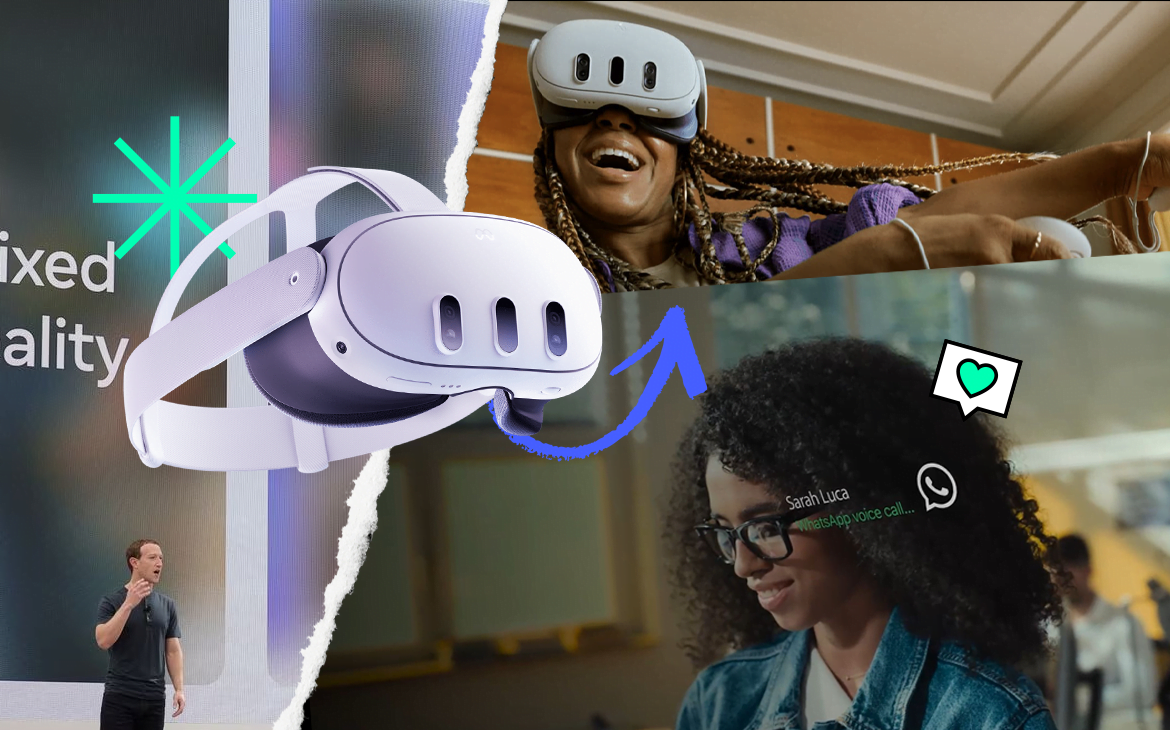
¿Cómo puede la inteligencia artificial (IA) y la tecnología del metaverso impulsar avances significativos para resolver las necesidades de los usuarios? En el décimo aniversario de Conect, Mark Zuckerberg, CEO y fundador de Meta, presentó como estas nuevas tecnologías están transformando la experiencia de los usuarios al unir el mundo físico con el digital.
Por: Lizbet Tirado
En la encrucijada de la realidad virtual, la IA y los lentes inteligentes de última generación, Meta Connect 2023 apunta hacia un futuro más inmersivo y conectado.
Estamos en el punto emergente de una revolución tecnológica que no solo transforma la manera en que interactuamos con la información digital, sino que también podría redefinir nuestra percepción del mundo. Esta realidad mixta nos permite llevar objetos digitales al mundo físico o crear experiencias que se pueden explorar con mayor alcance, donde la tecnología no solo se convierte en una herramienta, sino en un compañero inteligente que se adapta y evoluciona junto con nosotros, proporcionando un vínculo más profundo y significativo entre la tecnología y la humanidad.
La capacidad de anticipar y satisfacer las necesidades de los usuarios mejora la eficiencia de los servicios y productos, redefine la relación entre las marcas y sus usuarios. Este cambio hacia una interacción más natural y personalizada marca el comienzo de una era en la que el mundo físico y digital, se unen cada vez más para enfocarse en la experiencia del usuario, con el objetivo de hacerla más significativa.
La mente detrás de la experiencia
El núcleo del Quest 3 no solo radica en su impresionante hardware, sino también en la inteligencia artificial que impulsa su funcionamiento. Los algoritmos de aprendizaje automático y el reconocimiento de patrones crean una interacción más natural y personalizada dentro del metaverso.
Imagina que tu producto o usuario posee necesidades particulares, ya sea visualizar información específica, comunicarse, entretenerse o realizar tareas concretas. Los objetivos del producto pueden alinearse perfectamente con tu empresa, producto o las expectativas individuales de cualquier usuario.
Por ejemplo, si quisiéramos realizar una aplicación diseñada para ayudar a usuarios con TDAH a priorizar sus tareas. Esta innovadora herramienta podría utilizar señales sonoras y la creación de un avatar personalizado que guía al usuario durante sus actividades diarias. El producto se centraría en los objetivos específicos de los usuarios, proporcionándoles la asistencia necesaria para cumplir con sus responsabilidades. Además, otorgaría al usuario la libertad de interactuar y comunicarse con la aplicación de la manera que le resulte más cómoda.
El puente hacia la adopción masiva
El diseño de la experiencia del usuario (UX) y la interfaz de usuario (UI) se encuentran en el centro de la adopción masiva de estas tecnologías. La facilidad de uso, la intuitividad y la capacidad de personalización son factores clave que determinarán la aceptación del usuario. La combinación de la realidad virtual, la inteligencia artificial y las lentes inteligentes requiere una interfaz que sea tanto atractiva como accesible, y es aquí donde la fusión de UX/UI desempeña un papel crucial.
No obstante, el análisis del usuario y sus necesidades constituye el punto de partida esencial para potenciar su experiencia, permitiendo así la implementación efectiva de herramientas tecnológicas. La inteligencia artificial (IA) no se limita a interpretar nuestras acciones, sino que va un paso más allá al anticipar de manera proactiva nuestras necesidades, proporcionando una experiencia de usuario que es tanto fluida como adaptable.
La tecnología no solo se convierte en una herramienta, sino en un compañero inteligente que se adapta y evoluciona junto con nosotros, proporcionando un vínculo más profundo y significativo entre la tecnología y la humanidad.
¿Te interesa conocer las necesidades de tus usuarios y brindarles la mejor experiencia en tu producto? Échanos un grito y te ayudamos.