Más lápiz, menos prompts: Ahora es el turno de los humanos
“Esta botella la pinté yo, no una máquina.”
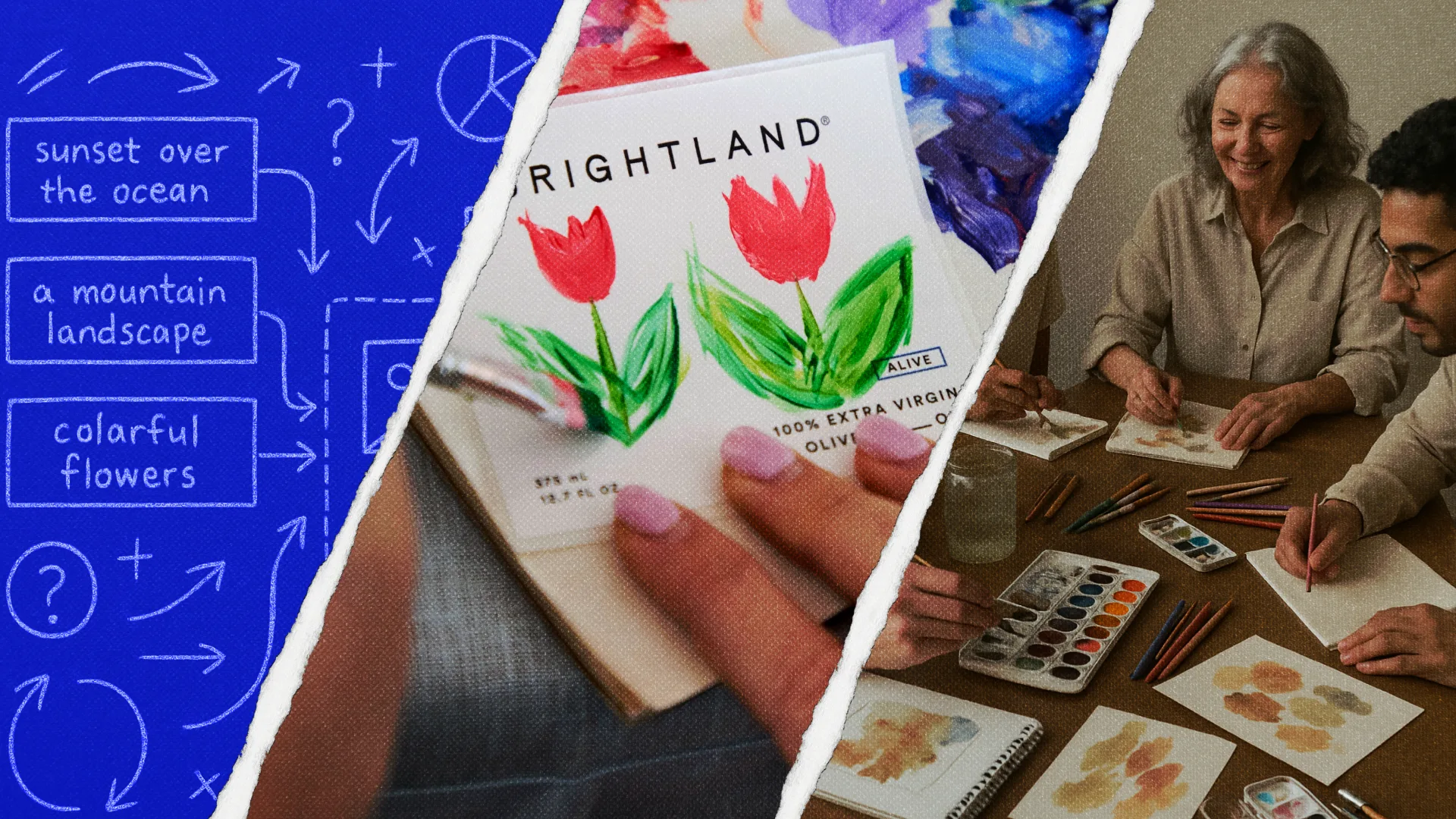
Ese fue (literal o emocionalmente) el mood en un evento reciente de Brightland, donde la marca invitó a la gente a intervenir sus propias botellas de aceite de oliva. Pinceles, colores, vino, conversación. Nada de prompts.
Por Gibrán García
Hoy la inteligencia artificial está embebida en todo lo que hacemos: redacción de correos, estructura de presentaciones, posts de LinkedIn y blogs (tose) impecablemente puntuados (¿en qué momento todos nos volvimos expertos en gramática y ortografía?). Lo que no vimos venir fue su evolución natural a plasmarse también en procesos de diseño y, particularmente, el diseño visual.
Hoy, en un mundo dónde el diseño visual se vuelve en su mayoría digital, el diseño de empaques libra una batalla muy particular por enaltecer el mundo análogo y diferenciarlo como un medio que es capaz de devolver el control creativo a las personas.
¿Es esto parte del movimiento anti-IA? ¿O simplemente una manera más humana, más estratégica y más memorable de construir una marca?
El anaquel sigue siendo físico
Herramientas generativas aceleran copies, renders y variaciones de empaque a un costo marginal. En teoría, eficiencia infinita. Sin embargo, un puñado de marcas “prémium” (aceites, bebidas, conservas) están experimentando con algo menos perfecto y más participativo: empaques para colorear, intervenir o personalizar.
Tres casos recientes ayudan a ver el patrón:
- Brightland – Paint & Pour Gift Set: nació tras un evento donde asistentes pintaron sus propias botellas; la energía comunitaria escaló a un kit de regalo (se lanzó para Día de las Madres).
- Ghia – Le Fizz (edición colorable): etiqueta en blanco y negro diseñada para que el consumidor la coloree.
- Fishwife – Summertime Art Box: estuches sin color que invitan a ilustrar el empaque.
Lo que a primera vista parecen activaciones lúdicas en realidad son marcas que abren espacio para la autoría del usuario como respuesta al boom de la IA generativa.
Eficiencia vs. expresión humana
La IA promete velocidad, escala, consistencia global y reducción de costos. Todo eso importa, sobre todo en categorías de bajo margen y distribución compleja.
Pero las marcas no viven sólo de logística; viven de vínculo, recuerdo y significado cultural. El gesto de colorear, pintar o intervenir un objeto convierte al empaque en actividad, no sólo en contenedor.
En otras palabras: si la IA homogeneiza, la participación humana singulariza. Y la singularidad es memoria de marca.
Caso 1 – Brightland: comunidad embotellada
Brightland organizó un evento para que la gente pintara sus propias botellas de aceite. El entusiasmo se tradujo en producto: Paint & Pour Gift Set. Según su fundadora, Aishwarya Iyer, la intención era escalar ese sentimiento de comunidad y traer de vuelta recuerdos de infancia: pintar, colorear, crear juntos. El resultado: un regalo que no sólo se consume; se vive.
Claves de marca: participación, nostalgia táctil, tiempo de calidad compartido.
Caso 2 – Ghia: colorea tu celebración
La edición Le Fizz llegó con etiqueta en blanco y negro lista para intervenirse. Melanie Massarin, fundadora, lo describe como una invitación directa a que el consumidor entre al mundo de Ghia: cuando alguien colorea la botella y la regala, el objeto se vuelve personal y considerado, dos valores centrales de la marca.
Claves de marca: regalo personalizado, conexión social, intencionalidad.
Caso 3 – Fishwife: arte de verano para todos
Summertime Art Box retira el color impreso y deja espacio abierto para que cada quien haga suyo el empaque. La cofundadora y CEO Becca Millstein lo conecta con algo más grande: la gente está buscando comunidad, creación y autenticidad. Una lata intervenida en casa termina siendo conversación en picnic, parrillada o reunión.
Claves de marca: comunidad en torno a la mesa, autoría compartida, diversión estacional.
El diseñador incómodo: ¿qué pierde la creatividad sin proceso?
El diseñador Max Hofert lanza la provocación dura: si todo se resuelve con prompts y outputs instantáneos, ¿dónde quedan la exploración, el error fértil y el conocimiento profundo del usuario? Sin sistema de prueba y falla, la innovación se aplana. El riesgo: marcas que «le venden el alma a la máquina» y terminan con resultados genéricos, intercambiables, olvidables.
Su advertencia no es nostalgia artesanal; es estrategia. Sin fricción creativa, no hay ventaja competitiva.
Lo que las marcas pueden aprender (checklist accionable)
- Deja espacio en blanco (literal): diseña zonas del empaque pensadas para intervención humana.
- Convierte el producto en ritual social: empaques que invitan a pintar en grupo se convierten en experiencia compartida
- Escala la participación con kits: lo que nace como activación física puede transformarse en set de regalo o edición limitada.
- Usa la IA a tu favor: usa herramientas generativas para iterar, costear o versionar layouts; reserva el momento visible para la personalización.
- Rompe la perfección: líneas chuecas = prueba de vida. La imperfección comunica autenticidad mejor que 10 claims impresos.
En Gerundio creemos que la tecnología vale cuando amplifica la conexión humana, no cuando la suplanta. El empaque, como menú, app o señalética, es un punto de contacto vivo. Cuando invitas a la gente a completarlo, lo conviertes en recuerdo y en historia compartida.
También creemos que el proceso es parte del activo de marca. Mostrarlo, abrirlo o dejarlo incompleto para que alguien más lo termine puede ser el gesto más poderoso en una era de outputs perfectos e impersonales.