Del dicho al hecho hay un gran trecho: Diferencias clave entre lo que los usuarios dicen y hacen
“Si le hubiera preguntado a las personas lo que querían, me habrían dicho que caballos más rápidos”. Esta cita, atribuida erróneamente a Henry Ford, se ha utilizado para argumentar que los usuarios no saben lo que quieren ni lo que necesitan. Pero, ¿realmente es así?
Por Valentina Álvarez
Aunque la supuesta cita de Ford es falsa, es cierto que el diseño ha evolucionado para involucrar activamente a los usuarios en el proceso creativo.
La metodología de user-centered design (o diseño centrado en el usuario) nos habla de la importancia de comprender a los usuarios para diseñar productos que funcionen.
Cuando los usuarios dicen una cosa y hacen otra
Puede ser frustrante escuchar a los usuarios, implementar cambios según sus sugerencias y descubrir que sus acciones no coinciden con sus palabras. Pero ¿por qué pasa esto?
Existen diversas razones por las cuales lo que los usuarios dicen no siempre refleja lo que realmente hacen, aquí te compartimos 5 que nos parecen sumamente relevantes:
1. El efecto de consulta genera un sesgo al responder
Al ser entrevistados o encuestados, los usuarios suelen sentir la presión de inventar respuestas a preguntas que nunca se habían hecho antes. Además, pueden autocensurarse o responder lo que creen que el entrevistador quiere escuchar.
2. Las preguntas inductivas conducen a las respuestas esperadas
Algunas preguntas están formuladas de tal manera que ya contienen la respuesta. Por ejemplo: “¿Te gustaría que las plumas tuvieran un botón más suave para que no te costara trabajo dibujar con ellas?”. Preguntas como esta pueden inducir respuestas sesgadas, impidiendo una evaluación objetiva.
3. Predicciones vs. realidad
Las personas suelen responder con sus aspiraciones futuras en lugar de su comportamiento real. En el futuro ideal, los usuarios no cometen errores ni enfrentan problemas, lo que los lleva a dar respuestas poco realistas sobre cómo actuarán.
4. Memoria y percepción selectiva
Cuando los usuarios describen sus experiencias, en realidad narran lo que recuerdan, no lo que sucedió exactamente. Además, pueden omitir detalles porque los consideran obvios o automáticos en su proceso. También tienden a racionalizar su comportamiento y culparse por los problemas que enfrentan, ignorando el impacto de otros factores o usuarios en el ecosistema.
6. Observación del comportamiento
La observación directa de la interacción de los usuarios con un producto es una metodología crítica en investigación de diseño. Combinada con entrevistas, encuestas y talleres de cocreación, permite detectar discrepancias entre lo que dicen los usuarios y lo que realmente hacen.
El reto del diseño centrado en el usuario
Si bien los usuarios conocen mejor que nadie sus propias circunstancias, sus respuestas dependen de la forma en que se les pregunta.
La clave para obtener información útil está en formular preguntas adecuadas y combinar diferentes métodos de investigación.
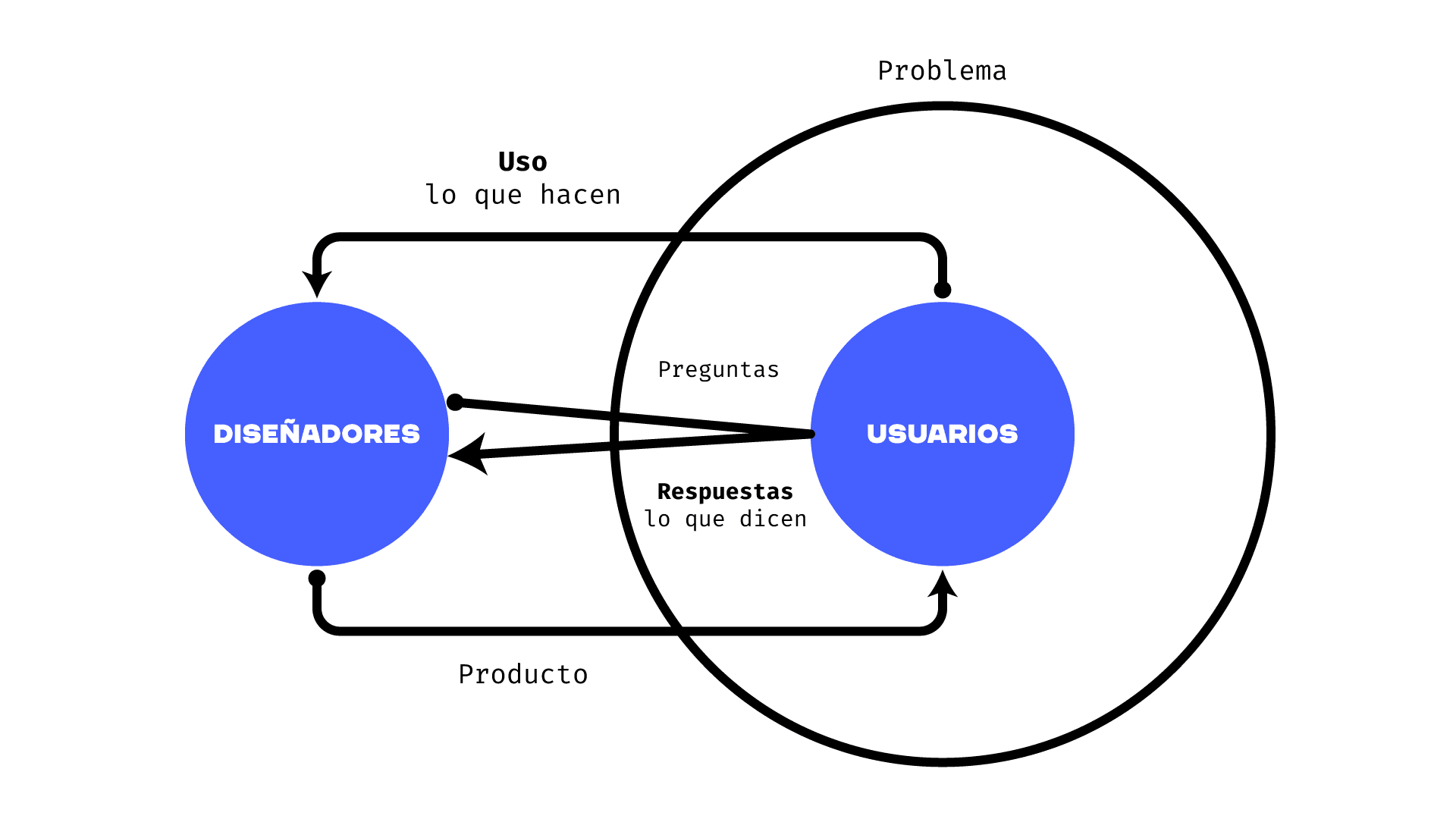
La investigación de usuarios no se trata solo de escuchar lo que dicen, sino de comprender cómo actúan.
En Gerundio, aplicamos un enfoque integral para cerrar esta brecha y diseñar soluciones basadas en el comportamiento real de los usuarios.
¿Buscas ir más allá de lo que dicen los usuarios para entender cómo actúan? Escríbenos y veamos cómo podemos ayudarte.